Content
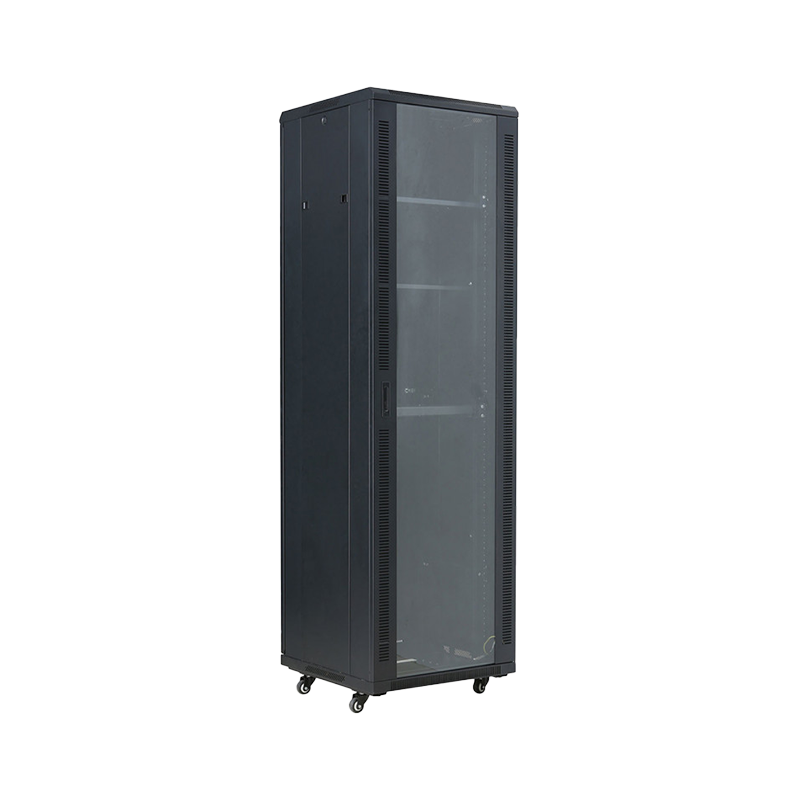
A wall mount network cabinet is generally the better fit for smaller equipment loads, tight spaces, and installations where floor space is limited, while a floor standing rack is the better choice once equipment count, weight, or future growth plans go beyond what a wall mounted unit can support. This wall mount vs floor rack decision mostly comes down to how much gear needs to fit today and how much room is needed to grow.
Both cabinet types protect the same core equipment, patch panels, switches, patch cords, and power distribution units, but they are built around different space and load assumptions. A useful network cabinet comparison starts with capacity and weight, then moves into airflow, cable routing, and installation access before a final choice is made.
This server rack comparison walks through each of those factors with reference figures so the decision can be based on the actual equipment plan rather than guesswork.
| Up to 15UWall Mount Capacity | Up to 47UFloor Standing Capacity | 6Comparison Factors Covered |
Before going into charts and figures, it helps to see the two cabinet types side by side across the factors that matter most for a typical installation.
| Aspect | Wall Mount Network Cabinet | Floor Standing Rack |
|---|---|---|
| Typical Capacity | 4U to 15U | 22U to 47U |
| Mounting Method | Fixed to a wall stud or bracket | Freestanding on the floor |
| Floor Space Use | None, mounted above floor level | Requires a dedicated floor footprint |
| Typical Weight Load | Up to around 100 kg | Up to around 800 kg |
| Best Suited For | Small offices, retail sites, IDF closets | Data centers, MDF rooms, growing networks |
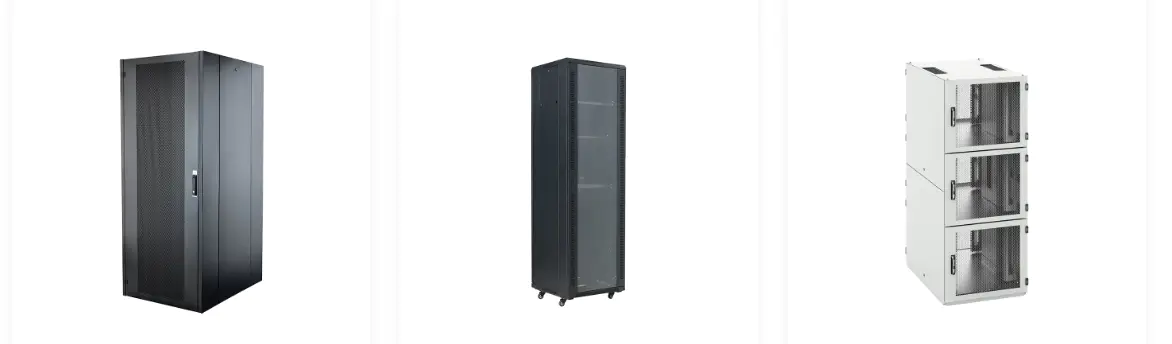
Capacity is usually measured in rack units, where one U equals about 1.75 inches of vertical mounting space. This single figure is often the fastest way to rule one cabinet type in or out.
A 15U wall mount cabinet is usually the practical ceiling for that format, since going taller starts to raise stability and wall load concerns. Floor standing racks pick up from there and comfortably reach 47U or more for larger installations.
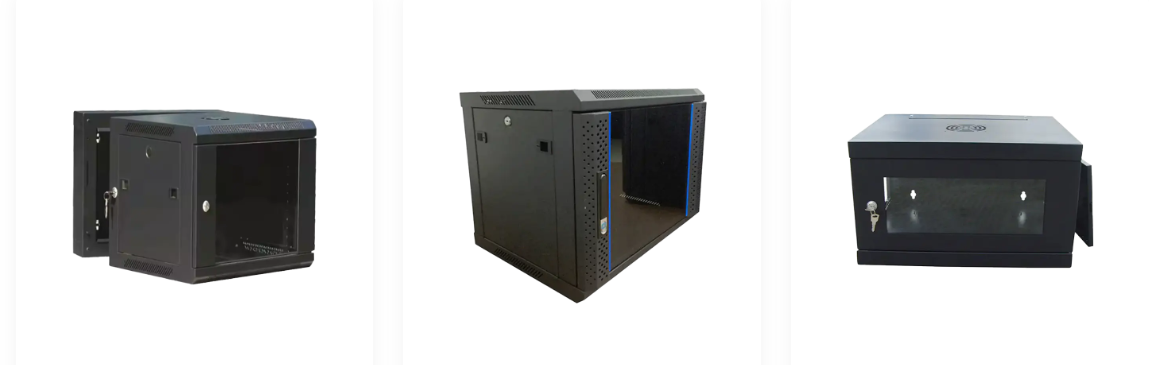
Equipment weight adds up quickly once switches, patch panels, power distribution units, and cable bundles are all mounted together, so static weight rating is another key part of any server rack comparison.
Bar height in this chart is scaled for readability, while the labeled figures show the actual typical rating. A heavy-duty floor standing rack can carry roughly eight times the load of a small wall mount cabinet.
The real test of either cabinet type shows up over time, as more switches, patch panels, and power units get added. The chart below tracks remaining rack space as equipment count increases, assuming each device uses about two rack units on average.
A wall mount cabinet typically reaches full capacity somewhere around six to eight average sized devices, while a floor standing rack still has comfortable room to grow at the same point, which is why fast growing networks tend to move to a floor rack sooner rather than later.
Beyond raw capacity, day to day usability often comes down to how air moves through the cabinet and how easy it is to route and label cable runs.
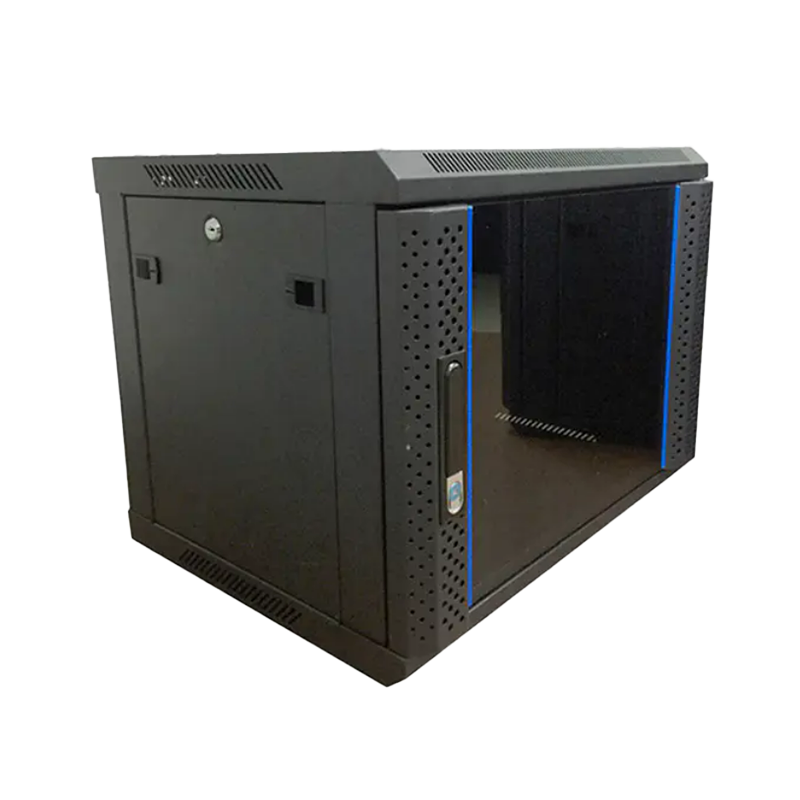
A ventilated wall mount cabinet uses perforated doors and side panels to let heat escape a smaller enclosed space, which matters more in a wall unit since equipment sits closer together than in a taller floor rack with more internal clearance.
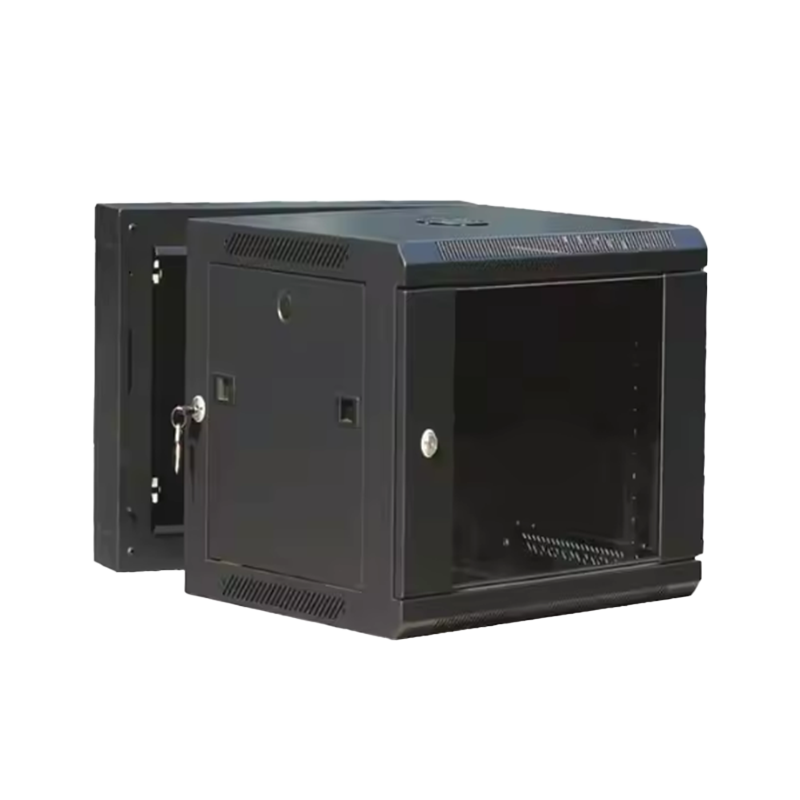
A swing frame wall mount cabinet hinges the equipment frame away from the wall, giving full rear access for cabling without needing to remove the entire unit, which is especially useful in tight utility closets where a floor standing rack simply will not fit.
Vertical cable managers, horizontal patch panels, and labeled bundles keep both cabinet types organized, though a floor standing rack generally offers more depth and side channel space for larger cable volumes as port counts increase.
Pulling the individual factors together into one view makes the overall trade-off easier to see at a glance.
Wall mount cabinets lead on space efficiency and installation ease, since they go up quickly without needing a dedicated floor footprint. Floor standing racks lead on load capacity, cooling headroom, and scalability, which is why larger or fast growing sites tend to favor them over time.
The right answer depends less on preference and more on the equipment plan for the room. A short checklist against the criteria below usually settles the decision quickly.
| Factor | Favors Wall Mount | Favors Floor Standing |
|---|---|---|
| Equipment Count | Small, stable equipment list | Larger or expanding equipment list |
| Available Floor Space | Limited or none to spare | Dedicated room or closet available |
| Growth Plans | No major expansion expected | Ongoing or planned network growth |
Ningbo Cixi Communication Technology Co., Ltd. was established on February 2, 2024, and is located in Ningbo City, Zhejiang Province, China. The company focuses on the design, research and development, production, and trade of network cabinets and charging cabinets, working from advanced equipment and manufacturing processes.
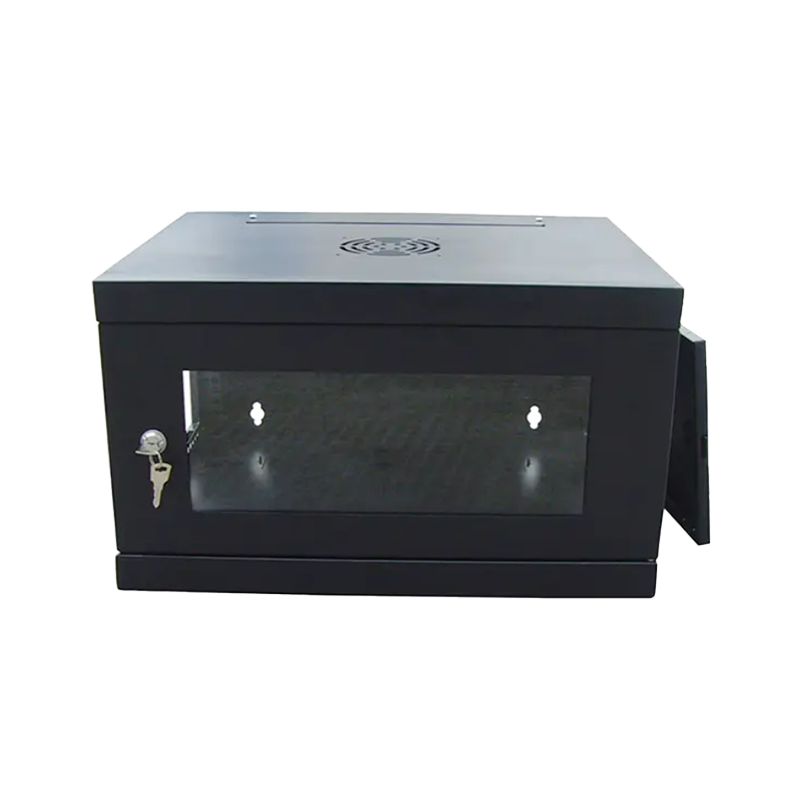
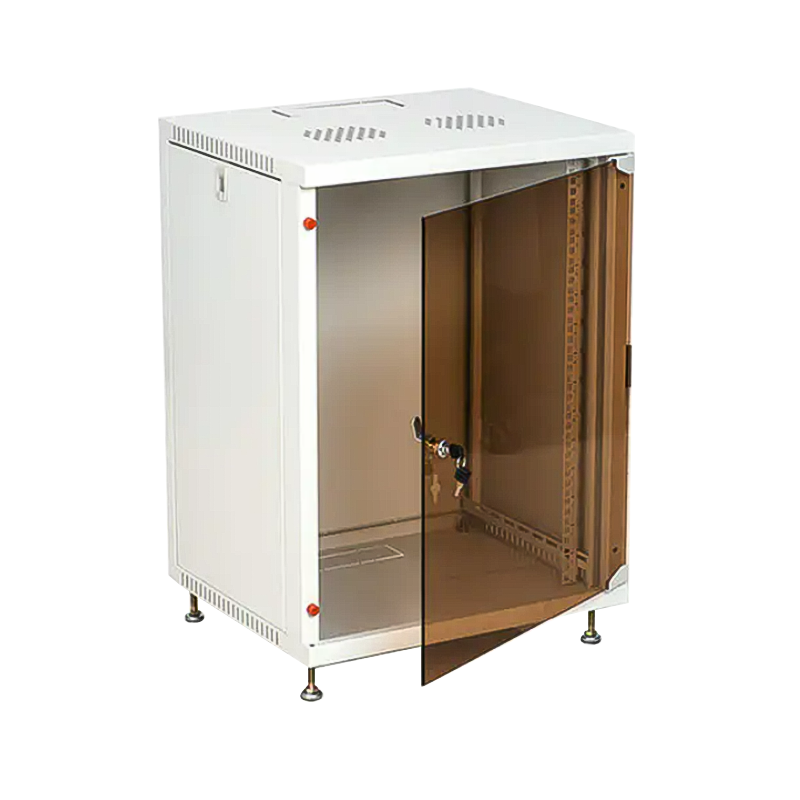
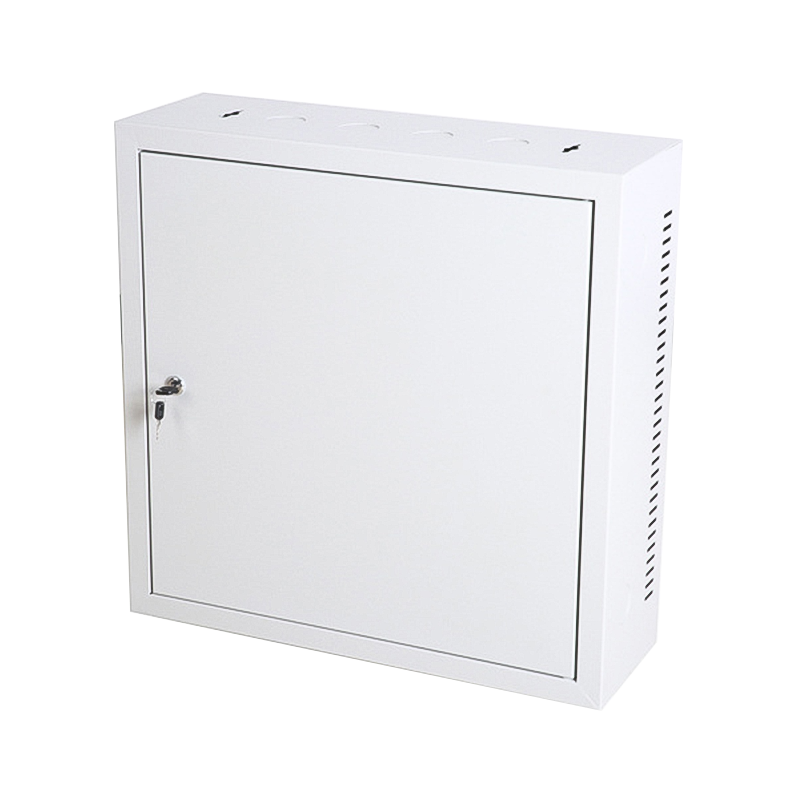
The company offers one-stop solutions for network communication equipment installation and charging needs, serving network data centers, enterprise offices, public transportation hubs, commercial premises, and personal residences. As a wall mount network cabinet manufacturer and wall mount network cabinet supplier, the product lineup covers lockable wall mount network cabinet options, ventilated designs, and swing frame configurations for different access requirements.
Operating as an OEM wall mount network cabinet and ODM wall mount network cabinet partner, the company runs an in-house design team that supports custom wall mount network cabinet projects for varied scenarios. As a China wall mount network cabinet factory, product development continues to focus on safety, intelligence, and ease of operation across the range.
As a newer company in the industry, the team places a strong emphasis on technological innovation and consistent quality control, working to bring practical improvements into every product generation for both enterprise and individual customers.
Q1. What is a wall mount network cabinet?It is an enclosure that mounts directly to a wall to hold network equipment such as switches and patch panels without using floor space. |
Q2. What size wall rack do I need?Size depends on the number of devices planned, but most small offices and IDF closets fit comfortably within a 6U to 15U wall mount cabinet. |
Q3. How much weight can a wall mounted rack hold?Typical wall mount cabinets are rated up to around 100 kg, depending on the bracket design and how securely it is anchored to the wall. |
Q4. Can servers be installed in a wall mount cabinet?Smaller servers can fit in a wall mount cabinet, but larger or heavier server hardware is generally better suited to a floor standing rack. |
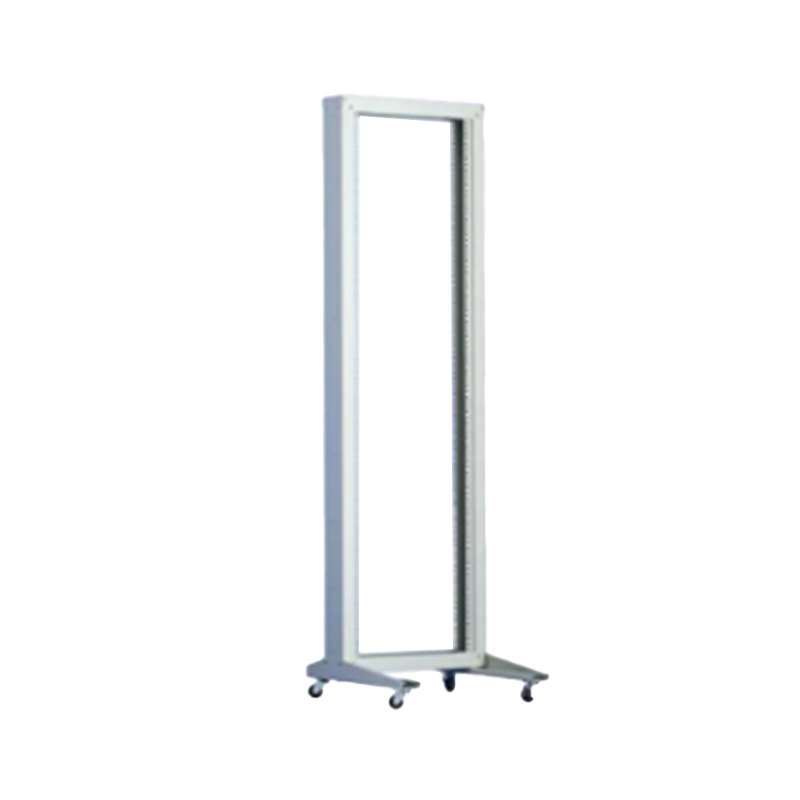
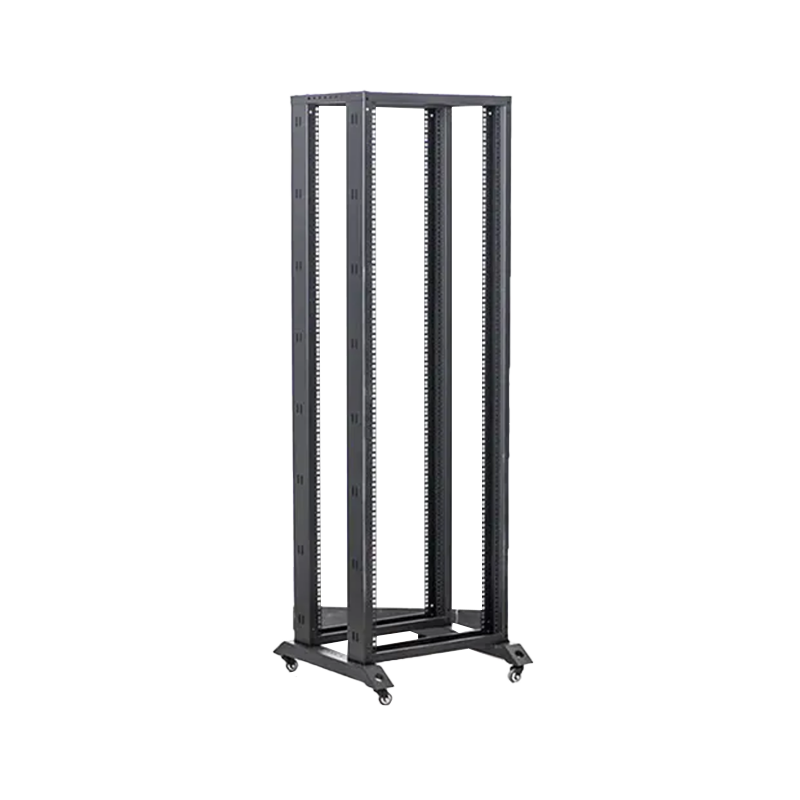
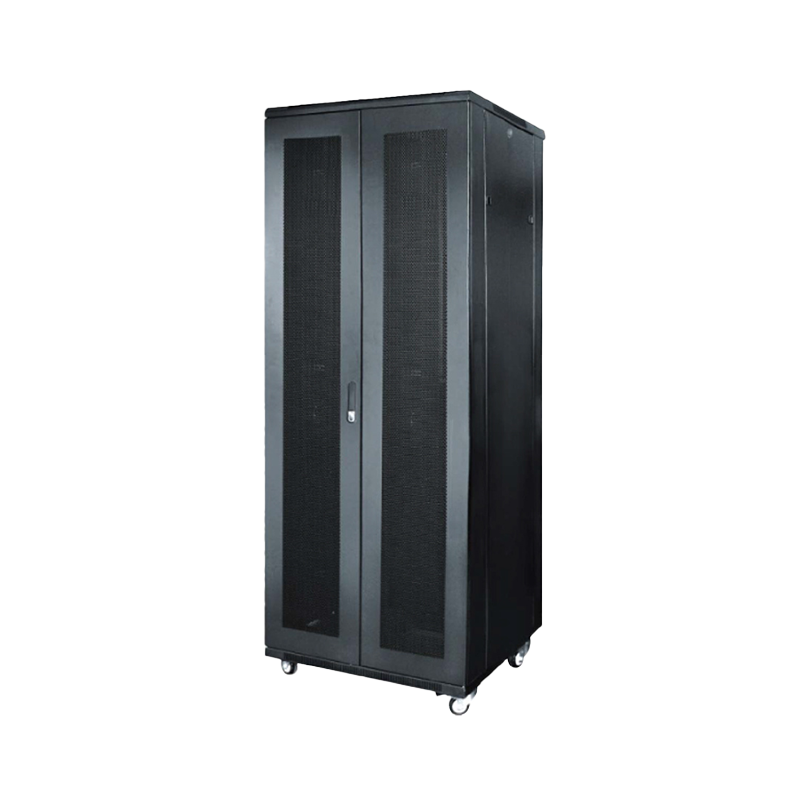
Q5. What is the difference between a rack and a cabinet?A rack is the open frame that holds equipment, while a cabinet is a fully enclosed structure with doors and side panels around that frame. |
Q6. How deep should a wall mount network cabinet be?Depth depends on the equipment being installed, though many wall mount cabinets range from around 300 mm to 600 mm to fit common switch and panel sizes. |
Q7. Are wall mount network cabinets lockable?Most wall mount network cabinets include a lockable door as a standard feature to help control access to the equipment inside. |
Q8. How do I organize cables inside a network cabinet?Vertical and horizontal cable managers, labeled patch cords, and consistent routing paths keep both wall mount and floor standing cabinets easy to service. |
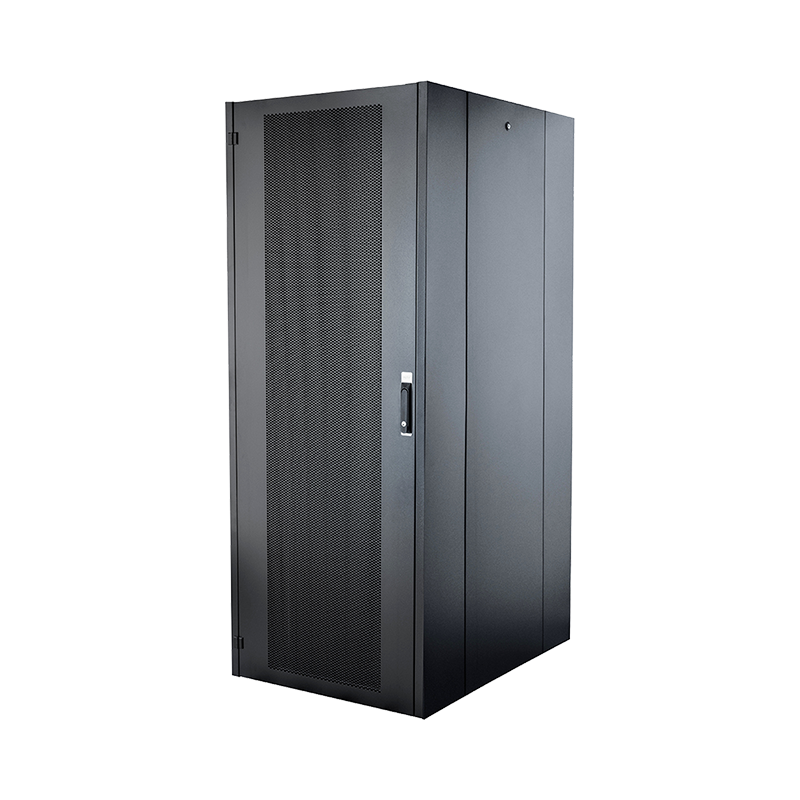

We are a company mainly engaged in the manufacturing of network cabinet , charging cart and other infrastructures.
Product Classification
Address
No.12 Fushan Road,Guanhaiwei Town,Cixi City,Ningbo,Zhejiang,China
PHONE
+86-17857397994

 English
 عربى
عربى
 Español
 русский